PETER AMMANN

JUNGSCHER  PSYCHOTHERAPEUT & FILMSCHAFFENDER


Geboren 1931 in Zürich. Schulen bis Matur in Aarau.

Ausbildung als Cellist in Zürich und Paris.

Studium und Promotion an der Universität Zürich in Musikwissenschaft, Religionsgeschichte und Ethnologie.

Dissertation: The musical Theory and Philosophy of Robert Fludd.

Gleichzeitig Studium der Analytischen Psychologie am C.G. Jung-Institut, Zürich. Diplomthesis zum Thema Musik und Seele.

1966 - 70 Rom: Regieassistenz bei Federico Fellini.

Seit 1970 freier Filmschaffender und Mitarbeiter der Télévision Suisse Romande. Zahlreiche Dok-Filme für ”Temps présent”, ”Tell Quel”, ”Viva”.

1977 - 84 Mitglied der Eidgenössischen Filmkommission (BA).

Seit 1988 psychotherapeutische Praxis in Zürich und Genf.

Dozent, Lehranalytiker und Supervisor am C.G. Jung-Institut, Zürich.

Seit 2004 Dozent, Lehranalytiker und Supervisor am Internationalen Seminar für Analytische Psychologie ISAP Zürich.

Seit 1990 Lehrtätigkeit und Filmprojekte in Südafrika, Namibia und Botswana.

PETER AMMANN

JUNGIAN  PSYCHOANALYST  &  FILMMAKER


Born 1931 in Zürich. Schools until matric in Aarau.

Training as cellist in Zürich and Paris.

Graduation at the University of Zürich. Ph.D., in Musicology, History of Religion and Ethnology.

Doctoral Thesis: The musical Theory and Philosophy of Robert Fludd.

At the same time training in Analytical Psychology at the C.G.Jung-Institute Zürich. Diploma thesis Music and Psyche.

1966 -1970 Rome: Assistant of Federico Fellini.

Since 1970 independent filmmaker and collaborator of Télévision Suisse Romande. Doc-Films for “Temps présent“, “Tell Quel“, “Viva“.

1977-1984 Member of the Swiss Film Board.

Since 1988 psychotherapeutic practice in Zürich and Geneva.

Lecturer, training analyst and supervisor at the C.G. Jung-Institute Zürich.

Since 2004 lecturer, training analyst and supervisor at the International School for Analytical Psychology ISAP Zurich.

Since 1990 Lectures and Films in South Africa, Namibia and Botswana.

Ich war ambivalent in Bezug auf mein Musikstudium. Eines Tages sagte sie: “Sie müssen Jung besuchen!“, und arrangierte einen Besuch bei ihm. In seinem typischen Basler Dialekt fragte mich Jung: „Was wünschen Sie?“ Ich erzählte ihm von meinen beruflichen Zweifeln und meinen Fantasien, jungsche Psychologie zu studieren. Worauf Jung sagte, Musik habe ja mit hören zu tun und Gehör führe zu Gehorsam, zum hören auf die innere Stimme...


Später beendete ich mein Cellostudium und begann die Ausbildung am Jung-Institut. Die Vorlesungen von Marie-Louise von Franz begeisterten mich und so setzte ich meine Lehranalyse nach dem Propaedeutikum bei ihr fort. Das Wichtigste, was ich von ihr lernte, war ein Brücke zu machen zwischen den Träumen und dem „realen“ Leben.


Nach der Diplomierung am Jung-Institut gingen meine künstlerischen Interessen in Richtung Film. Ich liebte Fellinis Filme und wusste, dass er in Analyse war beim ersten jungschen Analytiker in Italien, Ernst Bernhard. Fellini bewunderte Jung. Als ich ihm sagte, ich sei ein jungscher Analytiker aus Zürich, war die Türe offen. Fellini gab mir Gelegenheit, als Assistent meine filmische „Lehre“ zu machen in der Zeit, als er einen seiner wichtigsten Filme drehte, den Satyricon. 2007 wurde sein Traumbuch publiziert. Ich gab darüber eine Vorlesung am Kongress Art and Psyche in San Francisco 2008.


Zurück in der Schweiz arbeitete ich einige Zeit ausschliesslich als Dokumentarfilmer. Dann kam eine unerwartete Wende in meinem Leben. Meine Rückkehr zur Tätigkeit als jungscher Analytiker wurde stark beeinflusst durch Laurens van der Post, den ich 1984 kennen lernte. Er war zutiefst „jungianisch“. Ich bewunderte, wie sehr er in seinem Leben aktive Tat und reflektierende Kontemplation zu vereinen wusste. Durch ihn und seine Bücher begann ich mich für Afrika zu begeistern.


1990 lud mich Vera Bührmann ein, am Jung Centre in Kapstadt Vorlesungen und Seminare zu geben. Das war der Anfang meiner Lehrtätigkeit in Südafrika. Zugleich machte ich dort auch Dokumentarfilme, insb. über die Buschleute und ihre faszinierenden Felsbilder. Am IAAP Kongress 2007 in Kapstadt organisierte ich sodann Workshops Healing in two Worlds –Jungian Psychotherapists encounter African Traditional Healers. Das wiederum war der Anfang eines Projekts, das weiterging mit vielen verschiedenen Anlässen sowohl in Südafrika wie auch in der Schweiz. Ich hoffe sehr, dieser Dialog und Austausch kann fortgeführt werden.
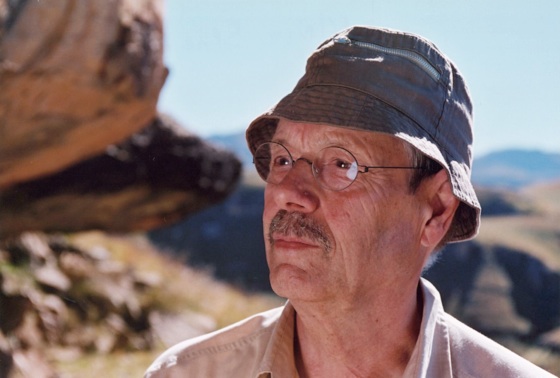
I was ambivalent about my musical studies. One day she told me “you must see Jung!” and arranged an appointment. Upon meeting him, Jung asked in his typical Basel dialect, “What do you want?”  I told him I had doubts about my musical career and was playing with the idea to study Jungian psychology. Jung told me music had to do with hearing and then made a link between hören (to hear) and Gehorsam (obedience) suggesting that listening with the ear could lead to listening to the inner voice…


Later I left the cello and began training at the C.G. Jung Institute Zürich.  After the propedeuticum, I started analysis with Marie-Louise von Franz whose lectures I very much admired. From her, the great lesson I learned was to be able to make the bridge between dreams and one’s “real” life.


Having graduated at the Jung-Institute, my artistic interests went into another field. I wanted to go into filmmaking. I admired Fellini’s films and knew he had been in a Jungian analysis, in fact with the very first Jungian analyst in Italy, Ernst Bernhard. Fellini admired Jung. When I told him that I was a Jungian analyst from Zürich, the door was open. Fellini gave me the possibility to do my apprenticeship as an assistant when he made one of his most important films, the Satyricon. In 2007  his dreambook was published. I gave a lecture about it at the conference “Art and Psyche” in San Francisco 2008.


When I returned to Switzerland I went for a while into documentary filmmaking.  This was an interruption in my work as an analyst. Then there was an unexpected change in my life. Going back into working as an analyst was preceded and influenced by meeting Laurens van der Post whom I met in 1984. He was deeply Jungian and, in his life, achieved an extraordinary balance between action and reflection. He and his books aroused my enthusiasm for Africa.


In 1990 I was invited by Vera Bührmann to give seminars and lectures at the Jung Centre in Cape Town. This was the beginning of many lecture tours in  South Africa. At the same time I made documentary films, in particular about the Bushmen and their fascinating rock paintings. Later, at the IAAP Congress in Cape Town 2007, I organized workshops called Healing in two Worlds – Jungian Psychotherapists encounter African Traditional Healers. It was the beginning of a project including many meetings and workshops in South Africa as well as in Switzerland. I very much hope this dialogue and exchange will go on.

After the Matura I studied music, specifically the cello. Already before graduating I had a vague desire to get in touch with Jungian psychology.  In the library of my grandfather Emil Feer who was a well-known pioneer of pediatrics I discovered Jolande Jacobi’s book, The Psychology of CG Jung. I called her and made an appointment. Thus I entered the adventure of regular analysis...

Nach der Matur begann ich eine musikalische Ausbildung als Cellist. Ich hatte schon vor dem Abschluss den vagen Wunsch, mit der jungschen Psychologie in Berührung zu kommen. In der Bibliothek meines Grossvaters Emil Feer, der ein bekannter Pionier der Kinder-heilkunde war, entdeckte ich Jolande Jacobis Buch Die Psychologie von C. G. Jung. Ich rief sie an für eine Verabredung und so begann für mich das Abenteuer der Analyse…

PETER AMMANN

JUNGIAN PSYCHOANALYST & FILMMAKER

JUNGSCHER PSYCHOTHERAPEUT & FILMSCHAFFENDER